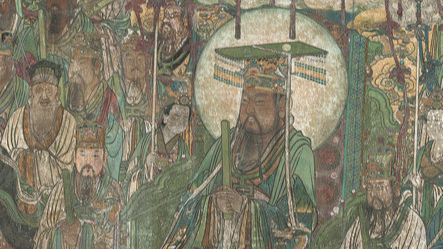
Yongle Palace Murals
Introduction
The Yongle Palace Murals, located in Ruicheng county, Yuncheng, Shanxi province, China, are a significant cultural treasure and one of the most exquisite examples of mural art from the Yuan Dynasty (1271-1368). These murals are housed within Yongle Palace, also known as the Palace of Eternal Joy. Renowned for its vibrant colors and intricate depictions of Taoist figures and cultural scenes, the Yongle Palace Murals are considered a masterpiece of Chinese artistry. The murals cover approximately 1,005 square meters, illustrating scenes from Taoist mythology and daily life. The most famous of these is the "Chaoyuan Tu," a large mural depicting a congregation of Taoist deities, which is celebrated for its intricate detail and historical significance.
Historical Background
These frescoes not only depict religious figures and rituals but also reflect the social norms and cultural aesthetics of their time. The palace and its murals have been a subject of admiration for art historians and critics alike, offering a window into the spiritual and cultural life of ancient China. Recognized for its historical and artistic value, Yongle Palace was designated as a national key cultural relics protection unit in 1961.
Preservation Efforts
Over time, the Yongle Palace Murals have faced significant deterioration due to environmental factors and the natural aging process. In 2016, experts discovered notable deterioration in the murals and structural deformations in the palace's wooden components. This prompted a rescue operation to preserve these valuable cultural artifacts. Preservation efforts have included both traditional conservation techniques and modern technological interventions. The establishment of the Yongle Palace Mural Protection and Research Institute has played a crucial role in these efforts, focusing on documenting, preserving, and restoring the murals and the palace structure. These initiatives ensure that the murals remain intact and accessible for future generations to study and appreciate.
Digital Restoration
With the advancement of technology, digital restoration has become an integral part of preserving the Yongle Palace Murals. Since 2018, a team from the School of Architecture at Tsinghua University has been working on digitally restoring the murals. This process involves using digital technology to capture the intricate details of the murals, some of which are invisible to the naked eye, and restoring them to their original colors and forms. Digitalization allows for a more profound analysis of the murals' condition, facilitating more effective restoration and preservation efforts. The use of AI in this process has enabled experts to recreate the murals' authentic colors, which have faded over centuries, thus bringing these ancient works back to life in the digital era.
Public Engagement and Exhibitions
Public engagement plays a vital role in the preservation and appreciation of the Yongle Palace Murals. Exhibitions showcasing these murals have been held both in China and internationally, allowing people to experience their beauty and cultural significance firsthand.
Notably, a digital exhibition of Yongle Palace Murals was held at UNESCO headquarters in Paris, marking the first overseas presentation of this Chinese mural art. Such exhibitions utilize modern technologies to replicate and display the murals, offering visitors an immersive experience that highlights the unique artistic language of the murals. These efforts not only promote cultural exchange but also raise awareness about the importance of preserving cultural heritage. Through interactive exhibits and educational programs, the public can engage with the murals' historical context and artistic value, fostering a deeper appreciation for this significant aspect of Chinese cultural heritage.








